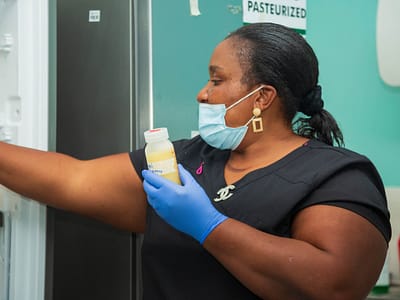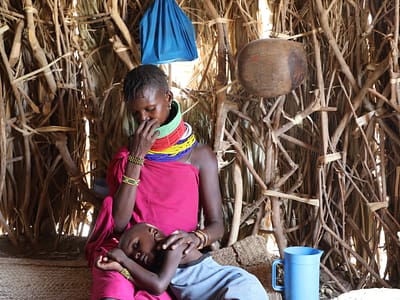

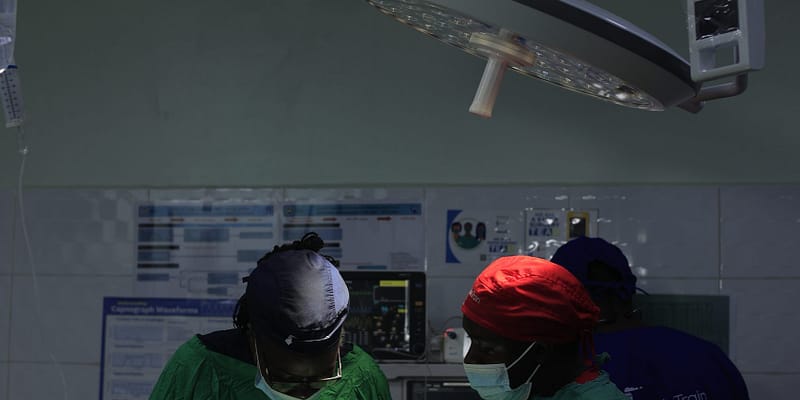
I have been on a hospital bed more times than I ever imagined I would.
Five surgeries. Different reasons. Different outcomes. But one constant.
Lying in a hospital bed makes you notice the people who come near.
They are the ones who adjust your pillow when you are too tired to move. They check your drip, blood pressure, medication, pulse, and breathing. They come in quietly at night while you sleep, careful not to wake you, but making sure you are okay.
For me, those people have often been nurses.
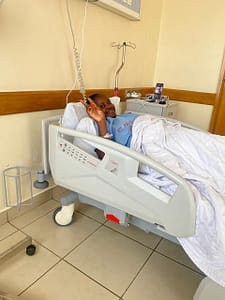
Lourdes in one of the many hospital admissions.
I have been in and out of the hospital far too many times. Sometimes it was to give life, other times because of a clot in my left leg that just would not go away. Along with dealing with the clot, I have gone through five surgeries, each one marking a different chapter of my life: loss, hope, healing, and survival.
The first was to save my life, after a pregnancy that ended before I could hold my child.
I still remember the day after that surgery.
After the operation, I was taken back to the ward and placed among new mothers holding their newborn babies. Then a little girl, who had come to visit her mother and her new baby sister or brother, walked straight to my bed. With the innocent curiosity of a child, she asked me, “Aunty, wapi mtoto wako nimuone?” (Aunty, where is your baby? I want to see him/her.)
Of course, I did not have a baby in my arms. My son was cold, lying in the morgue.
My dear reader, I broke down. I cried with a pain so deep that the little girl stood there confused, not understanding what she had asked or why it had hurt me so much.
A nurse who was attending to the patient next to me overheard the exchange. She came to my bedside and gave me the most comforting, reassuring hug. She said nothing. She did not need to. In that moment, she was no longer just the nurse on duty. She was a human being who had seen my pain and chosen to hold it with me.
Later, she arranged for me to be moved to a private room, away from the painful sight of mothers bonding with their newborn babies. It was a simple act, but to me, it was mercy. It was dignity. It was nursing at its most human.
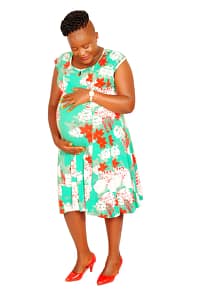
Lourdes shortly before delivery.
In the years that followed, I would return to the theatre again, this time to bring life into the world. Twice, I walked into surgery with hope and came out to meet my children, Jabali and Lisa. Those moments carried a different kind of weight: fear, but also joy.
And then there were the moments that reminded me just how fragile everything still was.
During one of my late-evening visits to my cardiologist, I thought I was simply stopping by before the long Easter weekend. I had just come from a full day of activities and was ready to travel upcountry to see my mum and siblings. My leg had swollen, and I assumed I only needed a new pair of compression stockings.
Instead, my doctor admitted me immediately.
I had driven myself to the hospital, carrying my laptop, camera, microphones, and all the paraphernalia that comes with working in communications. In a matter of minutes, everything changed.
When the doctor explained the danger I was in, that my D-dimer levels were dangerously elevated, I was shaken. And, being me, I broke down. All my plans for the Easter weekend disappeared right in front of me.
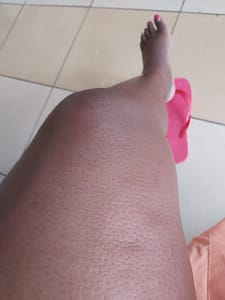
As I waited in the emergency room for my admission to be processed, a nurse came in and quietly stepped into that moment with me. She offered me a warm cup of tea to calm my nerves. When I needed to go to the washroom, she insisted on wheeling me there and waited until I was done.
By the time I was finally assigned a bed, it was long past dinner time. She made sure I had something to eat, helped me settle into the ward, and the following morning, she came back just to check on me, though she was assigned to work somewhere else.
It may have seemed like small acts. But in that moment, they were everything.
There were other procedures too, quiet attempts at healing, at restoring what had been strained, at giving my body another chance.
And then there was the surgery on my leg, the one meant to help blood flow again, to manage a clot that refused to go away. That one came with its own fears, its own uncertainties, its own long recovery.
And each time, the people closest to me have been nurses.
As Nurses Week ended yesterday, May 12, I found myself thinking not just about what nurses do but also about how they make patients feel: seen, cared for, protected, and less alone.
For many patients, nurses are the face of care.
Doctors diagnose. Surgeons operate. Specialists review. But nurses stay. They are there during the long hours between ward rounds, when the family has gone home.
Nurses carry the emotional weight of illness in ways that never appear in medical records.
Interestingly, I once thought I would become a nurse, though not by choice. Millennials can relate- our parents and sometimes relatives decided on a job-secure career choice for us.
After high school, my aunt really wanted me to become a nurse. But my heart was fearful.
I am afraid of blood and needles. I was afraid of the very things nurses face every day. I prayed, asking God not to get shortlisted for Kenya Medical Training College (KMTC), so, as you can see, I did not become a nurse.
Instead, I became a health storyteller, and nurses have become some of my favorite people.
It is not because they are perfect. It is not because hospitals are easy places to work. It is not because they never feel tired, frustrated, or overlooked. It is because, despite everything, they keep showing up, even when lacking essential tools and supplies, short-staffed, and struggling with high patient-to-nurse ratios.
They show up for strangers.
They show up for people in pain.
They show up for patients who are afraid, confused, impatient, weak, angry, hopeful, silent, or broken.
They show up on public holidays, during night shifts, in emergencies, in understaffed wards, in busy operating rooms, in rural clinics, in intensive care, in maternity, in surgical wards, and in communities.
So often, their work goes unnoticed. They deserve recognition not just during Nurses Week, but every single day of the year, for all the care and commitment they bring to their patients.
Before Nurses Week fades from memory, I want to say thank you.
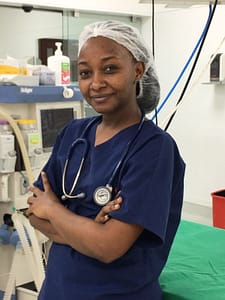
Belinda Karimi- a theatre nurse at Aga Khan Hospital, Mombasa
- To the nurses who have cared for me during my admissions, thank you.
- To the nurses who have stood beside my hospital bed, thank you.
- To the nurses who have prepared me for theatre and received me after surgery, thank you.
- To the nurses who have checked on my leg, monitored my medication, asked about my pain, and reminded me to take one step at a time, thank you.
- To the nurses who have held patients’ hands, thank you.
- To the nurses who have been gentle to fragile patients, thank you.
- To the nurses who have worked long shifts and still found the strength to be kind, thank you.
- To the nurses who may never know how much their words comforted someone, thank you.
As Nurses Week comes to an end, I hope we do more than just say kind words. I hope our gratitude leads to respect, better working conditions, fair pay, safer workplaces, adequate staffing, the right tools, and real opportunities for nurses to lead.
I may not have become a nurse, but life has let me see nursing from the other side, as a patient who has needed care again and again.
If you have ever felt safer because a nurse was nearby, this week is perfect to say thank you. And if you believe stories like this matter, follow Health Binder for more human-centered health stories from Africa.
What is your reaction?