‘I am admitting you.’
‘This can be life-threatening!’
Those two sentences from the doctor, along with the accompanying nonverbal cue, made me sense the seriousness of the situation I was in.
I remember dropping a tear, then another, and another, till I made a stream of tears.
‘Will I be admitted together with the baby?’ I managed to ask.
‘Considering the current COVID-19 situation, it might be challenging, but you can confirm with admissions,’ said the doctor.
I took the admission and lab request form and headed straight to the toilet. I cried a good one! I wasn’t sure whether it was because of the pain in my leg or the thought of being admitted without my 6-week-old baby, or both.
Allow me to take you back a little…

Six weeks before this admission, on 28th May 2020, at exactly 10.38 am to be precise, I gave birth by C-section to my second child, the beautiful baby Lisa- my missing puzzle!
After four awesome days, I was given a clean bill of health and carried home my beautiful girl, given to me by a bountiful God. My doctor and the nurses caring for me encouraged me to walk around, which I did willingly, even at home.
Two weeks postpartum, I started experiencing severe backaches, which I suspected could have been the spinal injection I received at the theatre while giving life. The night before going for my two-week postpartum review, I never slept a wink; the pain was just too much. I remember getting into the doctor’s office in the morning, limping, in so much pain and tears, doing the talking (I, Lourdes Walusala, can cry for Africa!) He immediately prescribed an injectable painkiller to ease the pain.
I continued with the medication he had prescribed, but three days after, the pain returned with all its wicked relatives. I consulted an orthopedic surgeon who prescribed even stronger but breastfeeding-friendly medication. Just two days after taking the medication, my back was as good as new. I showed up in his office two weeks later to testify that I was totally and completely healed. I remember it was on a Wednesday, and I was in a very good mood. It must have been the haircut or the shoes- those two things have a way of lifting my spirit.
Something, however, happened as I was leaving for home.
I felt a very sharp passing pain in my back, followed by another sharper one in my left arm, and even intense pain in my chest.
I consulted doctor Google, who did not help much, so I concluded maybe it was because I had carried the baby or the diaper bag (again, I, Lourdes Walusala, can pack for Africa and Asia)
Fast forward to Sunday, pain concentrated on my left leg, which was swollen, hot, and red, in my inner thigh. By the time I went back to the doctor on Monday morning, I could not even move my leg without limping.
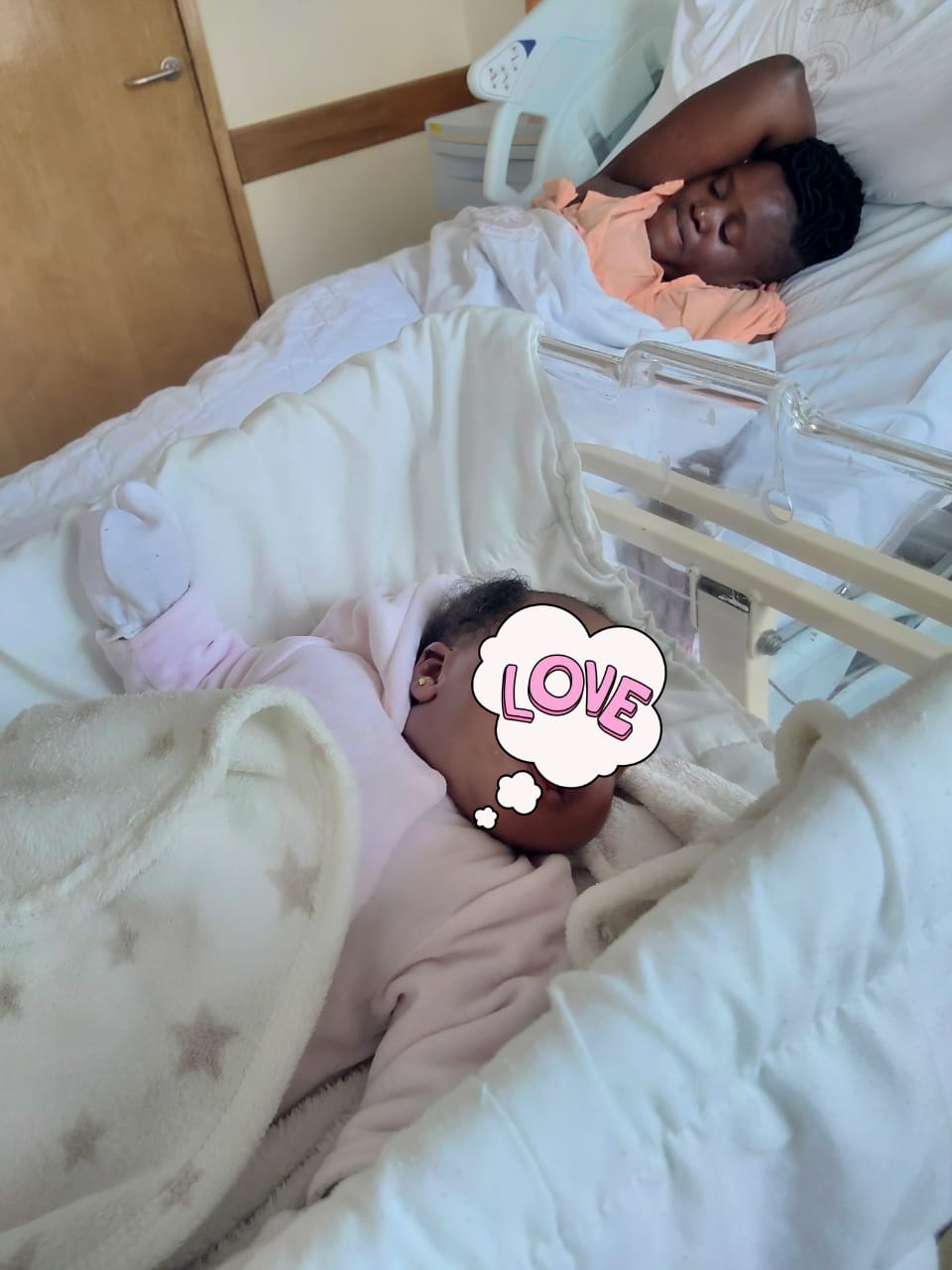
I was admitted together with my six-week-old companion and a caregiver to help with the baby for eight long days. Results of a Doppler scan and a blood test called D-dimer concluded I had left lower limb deep vein thrombosis (DVT) with pulmonary thromboembolism.
What is DVT?
Simply put, deep vein thrombosis (DVT) is a blood clot in the veins of the legs. When it dislodges and moves to the heart and lungs, it can be life-threatening.
Women are more likely to develop DVT during pregnancy and in the 4 to 6 weeks after giving birth. During pregnancy, blood-clotting protein levels increase while anti-clotting protein levels decrease. Too much bleeding at childbirth can cause DVT postpartum.
You increase your likelihood of getting DVT if you’ve had surgery, you are on extended bed rest, you are older, you smoke, you are overweight or obese, or if you sit for long hours.
Symptoms of DVT
Though half of the people do not experience warning signs, a heavy or painful feeling in the leg, tenderness and warmth in the thigh, and swelling are common symptoms.
If the clot moves to the lungs, it culminates in a pulmonary embolism (PE), causing shortness of breath, rapid heartbeat and breathing, chest pain, and coughing up blood.

I was put on injectable blood thinners twice a day while in the hospital and continued injecting myself for some time after discharge. The sight of the nurse with that injection made me die 1001 times- only my tummy can tell the story. I have been on an anticoagulant called Warfarin for three months now with regular INR tests – a blood test that looks to see how well your blood clots. I also wear compression stockings, which help put gentle pressure on my legs to keep my blood moving and reduce swelling.

So next time you notice my left leg is healthier than my right, know that post-thrombotic syndrome is alive and kicking. Mother and baby are doing great, though.
Have you ever experienced DVT? Comment below to help in creating awareness.
Until next week, please remember to read, share, and subscribe!